All living beings have a natural self-healing mechanism, the role of the osteopath is to put the patient in the conditions to start this mechanism, nature will do the rest.
“Osteopathy is based on the perfection of nature’s work. When all the parts of the human body are in order, we are good. When they are not, disease is the consequence. When the parts are re-started, the disease gives place to health.”
Andrew Taylor Still, father and founder of Osteopathy
The osteopath manages to initiate the self-healing mechanism by treating somatic dysfunctions
What is a dysfunction?
What is a dysfunction?
Dysfunctions affect those areas of our body that do not express vitality and, consequently, prevent the whole system from functioning well. For example, it can be a joint block between two vertebrae, it can be a tension of the intracranial membranes, a thickening of the fascia or a traction of the ligaments in the viscera.
During the evaluation, many dysfunctions can be found, the task of the osteopath is to find the most important ones and address the treatment towards them. We can imagine our body as a factory, where all the machines work in synergy and the final product is a general status of health. When some of the machines do not work well or do not work at all, the global production of the factory is compromised. These inefficient machines represent dysfunctions. The goal of the osteopath is to make them work again.
The osteopath is capable of finding and treating dysfunctions through the evaluation of four fundamental systems
The cranialsacral system
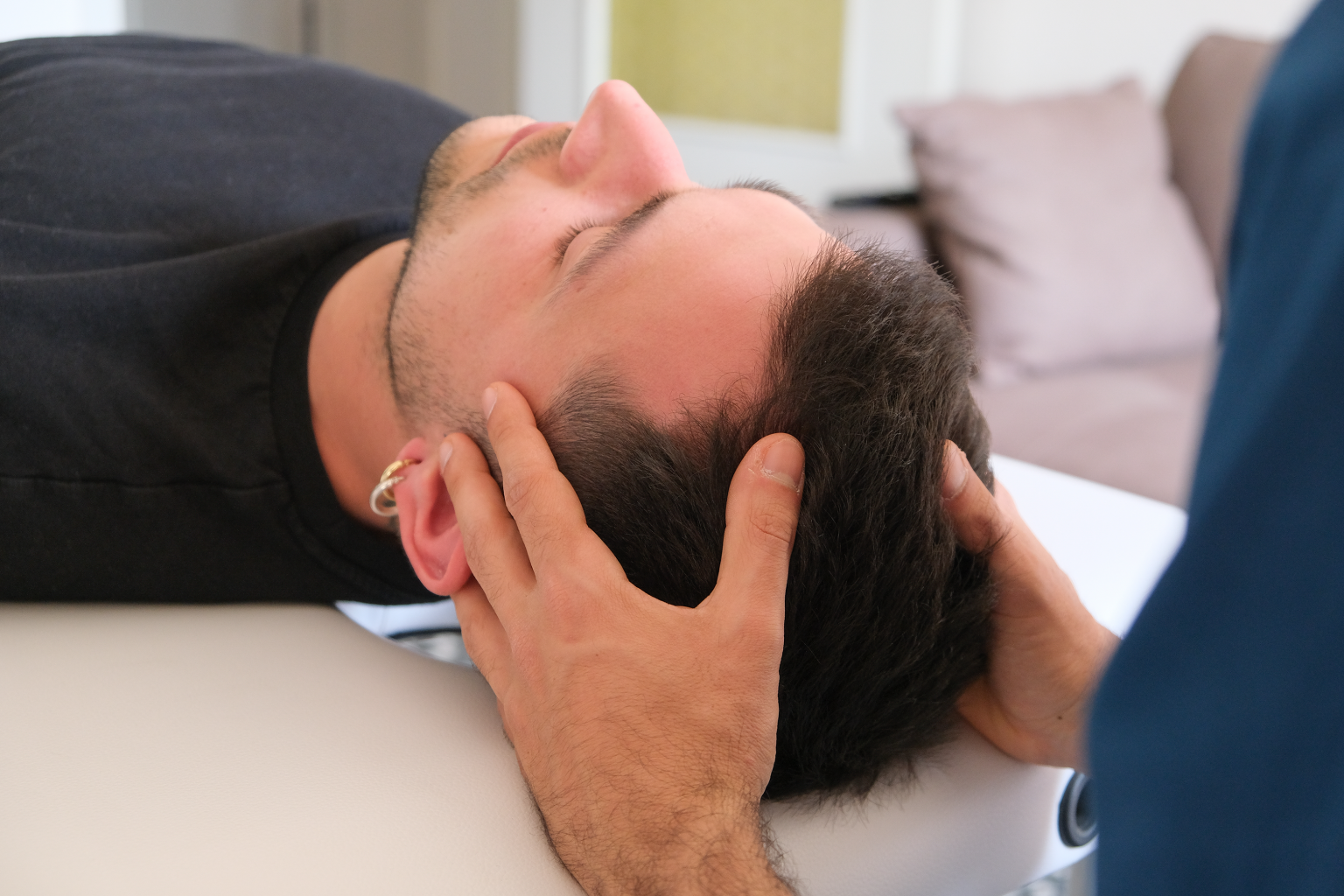
The evaluation consists in the analysis of the cranium and its connection with the sacrum through the dura. More than the cranium, the primary respiratory movement (PRM) of the brain and its subsequent expression in the periphery of the sacrum are evaluated. Through this movement, the osteopath is able to evaluate the physiology and therefore the “vitality” of the whole human body, keeping the cranium as a point of reference, as if it were the main engine of the whole machine. In addition, during the evaluation, the osteopath looks for movement restrictions (dysfunctions) that prevent proper physiology and, if necessary, corrects them through the treatment.
The musculoskeletal system
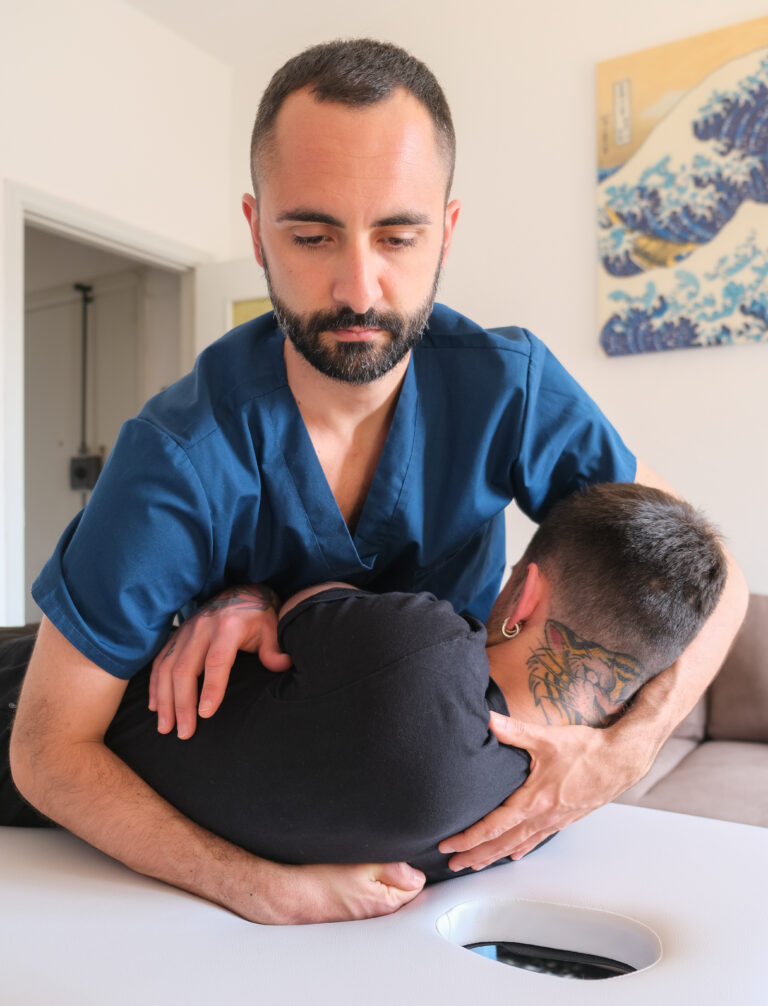
It is the combination of all the structures that support our body and allow its movement: bones, ligaments, tendons and finally muscles (“life is movement, movement is life” A.T. Still). The osteopath treats all those areas that have little mobility and that do not allow a proper functioning of the system. Through the use of different techniques, the affected areas are manipulated and they can return to their correct mobility.
The fascial system
A fascia is a structure of connective tissue that surrounds bones, muscles, nerves, viscera, veins, arteries, etc., it keeps them in contact with each other thanks to its continuity. It has a protective, supporting and cushioning function, and a role in haemodynamic, metabolic exchange, containment and separation. During a “fascial listening”, the osteopath examines the physiological movement of the system (which is nothing more than the continuous craniosacral movement) in search of any restrictions. Where necessary, the osteopath treats it using different techniques.
The visceral system
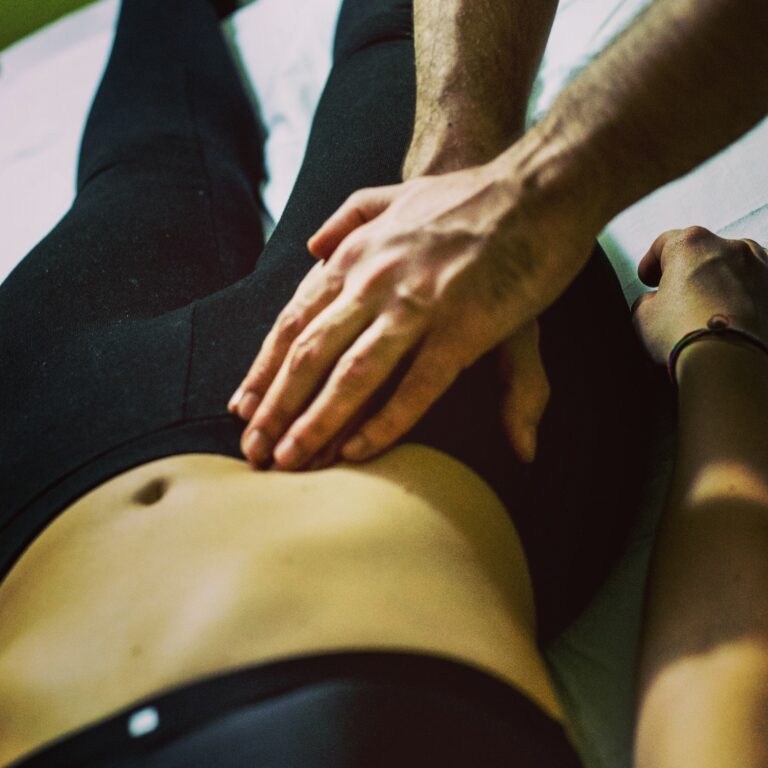
This system includes all the visceral structures that are located within our body such as heart, lungs, intestines, kidneys, sexual organs (female sex), glands etc. The evaluation of the visceral system is important because of its connection through the orthosympathetic and parasympathetic system with the spine, the medulla and the cranium. Dysfunctions are in fact caused by an imbalance of these two elements. Through treatment, the osteopath analyses the visceral system and its fascial movement, looking for restrictions or adhesions. If these dysfunctions are severe, the osteopath treats them in order to restore the correct movement.
During the treatment, these systems are evaluated as a whole without being separated from one another.
If not, it would go against the holistic philosophy of osteopathy. Once all four systems have been evaluated, the osteopath decides how to set up the treatment using different techniques.
There are several osteopathic techniques and they vary according to the age and the problems of the patient.